38 tf dataset get labels
TensorFlow Datasets By using as_supervised=True, you can get a tuple (features, label) instead for supervised datasets. ds = tfds.load('mnist', split='train', as_supervised=True) ds = ds.take(1) for image, label in ds: # example is (image, label) print(image.shape, label) Predict cluster labels spots using Tensorflow - Read the Docs We create a vector of our labels with which to train the classifier. In this case, we will train a classifier to predict cluster labels obtained from gene expression. We'll create a one-hot encoded array with the convenient function tf.one_hot. Furthermore, we'll split the vector indices to get a train and test set.
How to solve Multi-Label Classification Problems in Deep ... - Medium time: 7.8 s (started: 2021-01-06 09:30:04 +00:00) Notice that above, the True (Actual) Labels are encoded with Multi-hot vectors Prepare the data pipeline by setting batch size & buffer size using ...

Tf dataset get labels
tf.data: Build TensorFlow input pipelines | TensorFlow Core dataset = tf.data.Dataset.from_tensor_slices( (images, labels)) dataset Note: The above code snippet will embed the features and labels arrays in your TensorFlow graph as tf.constant () operations. python - Get labels from dataset when using tensorflow image_dataset ... The documentation says the function returns a tf.data.Dataset object. If label_mode is None, it yields float32 tensors of shape (batch_size, image_size [0], image_size [1], num_channels), encoding images (see below for rules regarding num_channels). Tensorflow | tf.data.Dataset.from_tensor_slices() - GeeksforGeeks With the help of tf.data.Dataset.from_tensor_slices() method, we can get the slices of an array in the form of objects by using tf.data.Dataset.from_tensor_slices() method.. Syntax : tf.data.Dataset.from_tensor_slices(list) Return : Return the objects of sliced elements. Example #1 : In this example we can see that by using tf.data.Dataset.from_tensor_slices() method, we are able to get the ...
Tf dataset get labels. tf.data: Build Efficient TensorFlow Input Pipelines for Image Datasets 3. Build Image File List Dataset. Now we can gather the image file names and paths by traversing the images/ folders. There are two options to load file list from image directory using tf.data ... How to use Dataset in TensorFlow - Medium dataset = tf.data.Dataset.from_tensor_slices (x) We can also pass more than one numpy array, one classic example is when we have a couple of data divided into features and labels features, labels = (np.random.sample ( (100,2)), np.random.sample ( (100,1))) dataset = tf.data.Dataset.from_tensor_slices ( (features,labels)) From tensors Datasets - TF Semantic Segmentation Documentation dataset/ labels.txt test/ images/ masks/ train/ images/ masks/ val/ images/ masks/ or use. dataset/ labels.txt images/ masks/ The labels.txt should contain a list of labels separated by newline [/n]. For instance it looks like this: background car pedestrian Create TFRecord Get labels from dataset when using tensorflow image_dataset_from ... My images are organized in directories having the label as the name. The documentation says the function returns a tf.data.Dataset object. If label_mode is None, it yields float32 tensors of shape (batch_size, image_size [0], image_size [1], num_channels), encoding images (see below for rules regarding num_channels).
Images with directories as labels for Tensorflow data 1.jpg, 2.jpg, …, n.jpg. If we want to use the Tensorflow Dataset API, there is one option of using the tf.contrib.data.Dataset.list_files and use a glob pattern. This will give us a dataset of strings for our file paths and we could then make use of tf.read_file and tf.image.decode_jpeg to map in the actual image. Load and preprocess images | TensorFlow Core The label_batch is a tensor of the shape (32,), these are corresponding labels to the 32 images. You can call .numpy () on either of these tensors to convert them to a numpy.ndarray. Standardize the data The RGB channel values are in the [0, 255] range. Keras tensorflow : Get predictions and their associated ground ... - GitHub I am new to Tensorflow and Keras so the answer is perhaps simple, but I have a batched and prefetched tensorflow dataset (of type tf.data.TFRecordDataset) which consists in images and their label (int type) , and I apply a classification model on it. `y_pred = model.predict (tf_test_dataset)` How to filter Tensorflow dataset by class/label? | Data Science and ... Hey @bopengiowa, to filter the dataset based on class labels we need to return the labels along with the image (as tuples) in the parse_tfrecord() function. Once that is done, we could filter the required classes using the filter method of tf.data.Dataset. Finally we could drop the labels to obtain just the images, like so:
Using the tf.data.Dataset | Tensor Examples # create the tf.data.dataset from the existing data dataset = tf.data.dataset.from_tensor_slices( (x_train, y_train)) # by default you 'run out of data', this is why you repeat the dataset and serve data in batches. dataset = dataset.repeat().batch(batch_size) # train for one epoch to verify this works. model = get_and_compile_model() … A hands-on guide to TFRecords - Towards Data Science To get these {image, label} pairs into the TFRecord file, we write a short method, taking an image and its label. Using our helper functions defined above, we create a dictionary to store the shape of our image in the keys height, width, and depth — w e need this information to reconstruct our image later on. Multi-Label Image Classification in TensorFlow 2.0 - Medium model.compile(optimizer=tf.keras.optimizers.Adam(learning_rate=LR), loss=macro_soft_f1, metrics=[macro_f1]) Now, you can pass the training dataset of (features, labels) to fit the model and indicate a seperate dataset for validation. The performance on the validation set will be measured after each epoch. Multi-label Text Classification with Tensorflow - Vict0rsch The labels won't require padding as they are already a consistent 2D array in the text file which will be converted to a 2D Tensor. But Tensorflow does not know it won't need to pad the labels, so we still need to specify the padded_shape argument: if need be, the Dataset should pad each sample with a 1D Tensor (hence tf.TensorShape ( [None ...
python - TF version : 2.4.1, TypeError: Input 'filename' of 'ReadFile' Op has type float32 that ...
How to filter the dataset to get images from a specific class ... - GitHub Is it possible to make predicate function more generic, so that I can keep N number of classes and filter out the rest of the classes? or is there any other way to filter the dataset to get images from a specific class? Environment information. Operating System: Distribution: Anaconda; Python version: <3.7.7> Tensorflow 2.1; tensorflow_datasets ...
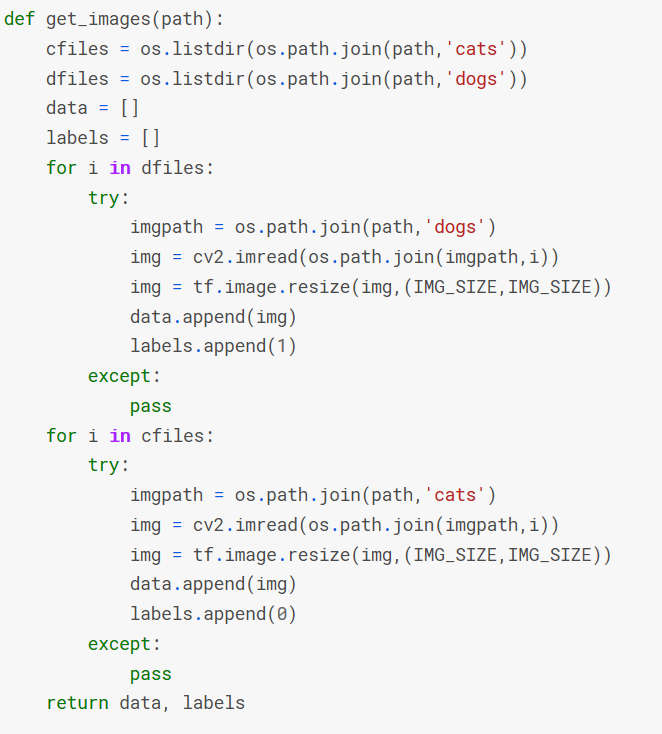
Perform Image processing with ease using Transfer learning. | by Narasimha | Analytics Vidhya ...
Get labels from dataset when using tensorflow image_dataset_from ... Solution 1: If I were you, I'll iterate over the entire testData, I'll save the predictions and labels along the way and I'll build the confusion matrix at the end. testData = tf.keras.preprocessing.image_dataset_from_directory( dataDirectory, labels='inferred', label_mode='categorical', seed=324893, image_size=(height,width), batch_size=32 ...

3.5. The Image Classification Dataset — Dive into Deep Learning 0.16.1 documentation
Data preprocessing using tf.keras.utils.image_dataset_from_directory Let's say we have images of different kinds of skin cancer inside our train directory. We want to load these images using tf.keras.utils.images_dataset_from_directory () and we want to use 80% images for training purposes and the rest 20% for validation purposes. We define batch size as 32 and images size as 224*244 pixels,seed=123.

python - Custom dataset in TensorFlow - Stack Overflow
Dataset object has no attribute to_tf_dataset #3304 RajkumarGalaxy commented on Nov 20, 2021. The issue is due to the older version of transformers and datasets. It has been resolved by upgrading their versions. # upgrade transformers and datasets to latest versions !pip install --upgrade transformers !pip install --upgrade datasets. Regards!

Two Ways to Implement LSTM Network using Python - with TensorFlow and Keras | Rubik's Code
tf.data filter dataset using label predicate - Stack Overflow However, the filter function returns the unfiltered in the above code. labels = [] for i, x in enumerate (tfds.as_numpy (dataset)): labels.append (x [1] [0] [0]) print (labels) Returns [4, 7, 5, 6, 0, 5, 5, 6, 5, 3, 6, 7, 0, 0, 6, 3] To reproduce the result, please use this colab link python tensorflow keras tensorflow2.0 tensorflow-datasets Share
![[러닝 텐서플로]Chap04 - 합성곱 신경망 CNN](https://t1.daumcdn.net/cfile/tistory/99DAA3405B1AC44D0C)
[러닝 텐서플로]Chap04 - 합성곱 신경망 CNN
tfdf.keras.pd_dataframe_to_tf_dataset - TensorFlow Ensures columns have uniform types. If "label" is provided, separate it as a second channel in the tf.Dataset (as expected by Keras). If "weight" is provided, separate it as a third channel in the tf.Dataset (as expected by Keras). If "task" is provided, ensure the correct dtype of the label.

slim module of TensorFlow models uses pre training model for recognition
tfds.features.ClassLabel | TensorFlow Datasets value: Union[tfds.typing.Json, feature_pb2.ClassLabel] ) -> 'ClassLabel' FeatureConnector factory (to overwrite). Subclasses should overwrite this method. This method is used when importing the feature connector from the config. This function should not be called directly. FeatureConnector.from_json should be called instead.
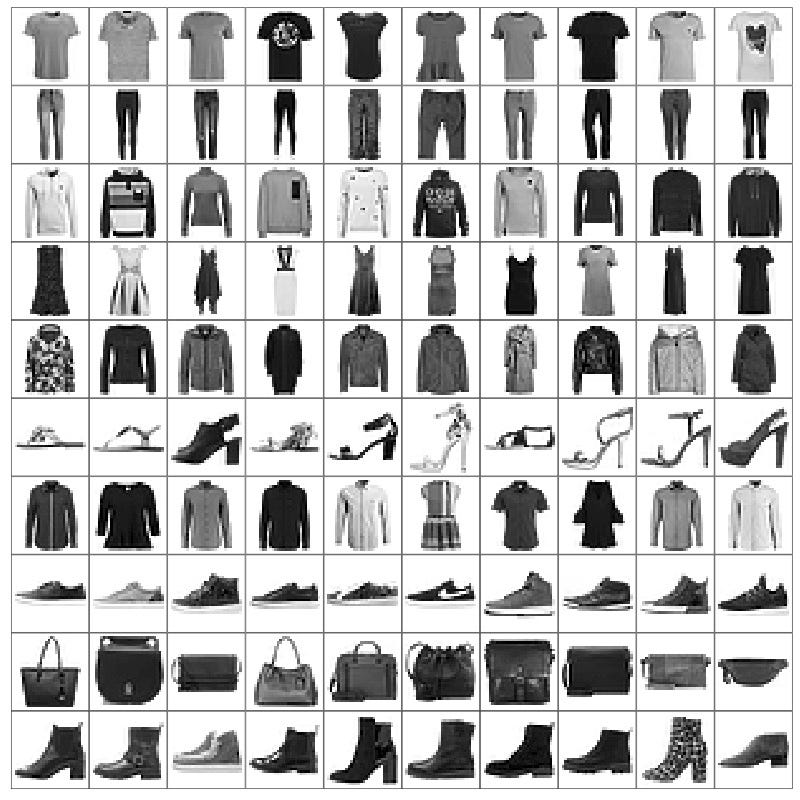
Fashion_MNIST_Data_Image Classification in TensorFlow | by sankar channa | Medium
How to convert my tf.data.dataset into image and label arrays #2499 I created a tf.data.dataset using the instructions on the keras.io documentation site. dataset = tf.keras.preprocessing.image_dataset_from_directory ( directory, labels="inferred", label_mode="int", class_names=None, color_mode="rgb", batch_size=32, image_size= (32,32), shuffle=True, )
Post a Comment for "38 tf dataset get labels"